What it does
Triggers an automatic door through hands-free, assistive, or caregiver-controlled intent signals.
Accessible Entry / Assistive Tech / Retrofit Door Access
A retrofit access module that lets users trigger an automatic door without reaching for the wall button, while preserving the existing accessible button.
Triggers an automatic door through hands-free, assistive, or caregiver-controlled intent signals.
Adds a relay path in parallel with the existing accessible push button so manual operation remains intact.
Uses debounce, confirmation timing, cooldown, and optional multi-signal gating before activation.
Product Overview
Automatic doors still fail some users when the only accessible control is a wall plate they cannot reach, press, or line up with consistently.
The retrofit path must trigger the door safely, reject noisy intent signals, preserve the original button behavior, and adapt to the timing and traffic patterns of each doorway.
A badge, card, or tag can trigger entry without reaching for a wall plate.
Works with simple adaptive switches already familiar to the user.
Optional app or web trigger for caregivers, staff, or authorized users.
Wave-to-open or close-range detection can be tuned to the doorway.
Installation
The controller is designed to close a relay contact in parallel with the existing accessible push-button input. The original wall button remains the primary fallback path.
Intent input
NFC, switch, phone, or proximity signal
Safety logic
Confirm, gate, activate, cooldown
Relay output
Parallel trigger path to door operator
Manual fallback
Original button remains available
Safety
The goal is not just hands-free entry. The product has to reject noise, avoid rapid repeated triggers, and keep a manual fallback available.
Best Fit
This is positioned as a pilot-ready reference design for a specific doorway, user workflow, and safety profile.
Bedroom, garage, entry, and interior-access routes.
Therapy rooms, care areas, and staff-assisted entry.
Classrooms, labs, and accessibility-focused pilot areas.
Product type
Retrofit hands-free door access module
Access modes
NFC, assistive switch, phone trigger, proximity or wave-to-open modes
Output type
Relay contact (parallel trigger path)
Installation mode
Parallel with existing accessible button
Controller
ESP32-class embedded controller
Logging
Local event logs with optional cloud-sheet export
Connectivity
BLE / Wi-Fi (config dependent)
Architecture
The page leads with the product. The system diagram remains available for engineering review and implementation planning.
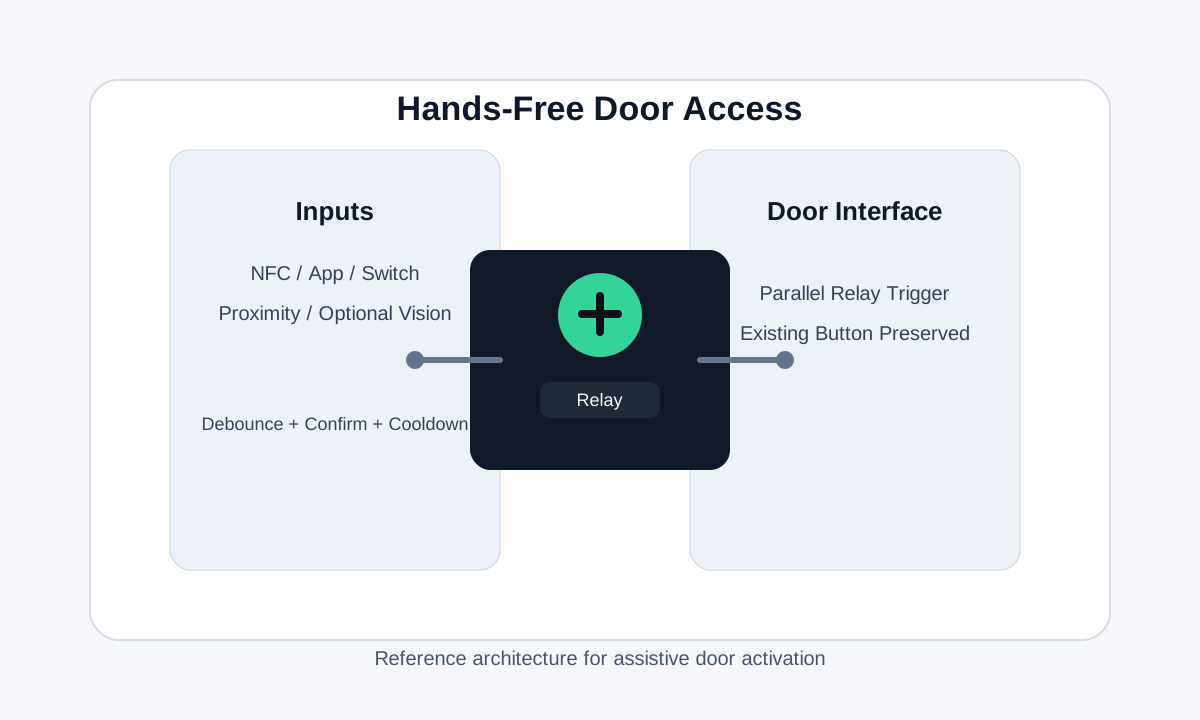
Open architecture overview
FAQ
No. The relay path is designed in parallel so the original accessible button continues to function.
The logic uses debounce, confirmation windows, and cooldown timing, with optional multi-signal gating.
Yes. NFC, assistive switch, app trigger, and proximity-only modes can be used in no-camera configurations.
Logging is event-focused and can be configured to minimize stored personal data according to deployment policy.
This reference design targets systems that accept a dry-contact style trigger path similar to accessible push-button interfaces.
I can help evaluate the access mode, relay path, safety timing, and validation plan for a specific home, clinic, or school environment.