Research interests
- Secure and resilient IoT firmware
- Low-power connected edge systems
- Reliability engineering under field constraints
Projects
Research-aware embedded systems work for secure IoT delivery, engineering reliability, and publication-grade technical rigor.
Every system is mapped to explicit checks: [Metric], [Baseline], [Result], and failure-mode evidence.
Evidence artifacts are tracked with [Repo link], [Dataset], and repeatable test notes where disclosure allows.
Ongoing work mapped for [Paper link] and preprint-ready structure with reviewer response traceability.
Structured as Problem → Approach → Result to make evaluation faster for hiring, consulting, and research collaboration.
Quick filters
A modular hub that unifies Wi-Fi and BLE devices with secure provisioning and OTA updates.
Problem: Reliability and delivery constraints around architecture, provisioning, security.
Approach: Audited the existing prototype and mapped the device onboarding flow. Designed the modular service layer and OTA update pipeline.
Result: Improved device onboarding reliability and reduced support time.
Evidence: [Metric] vs [Baseline] -> [Result]
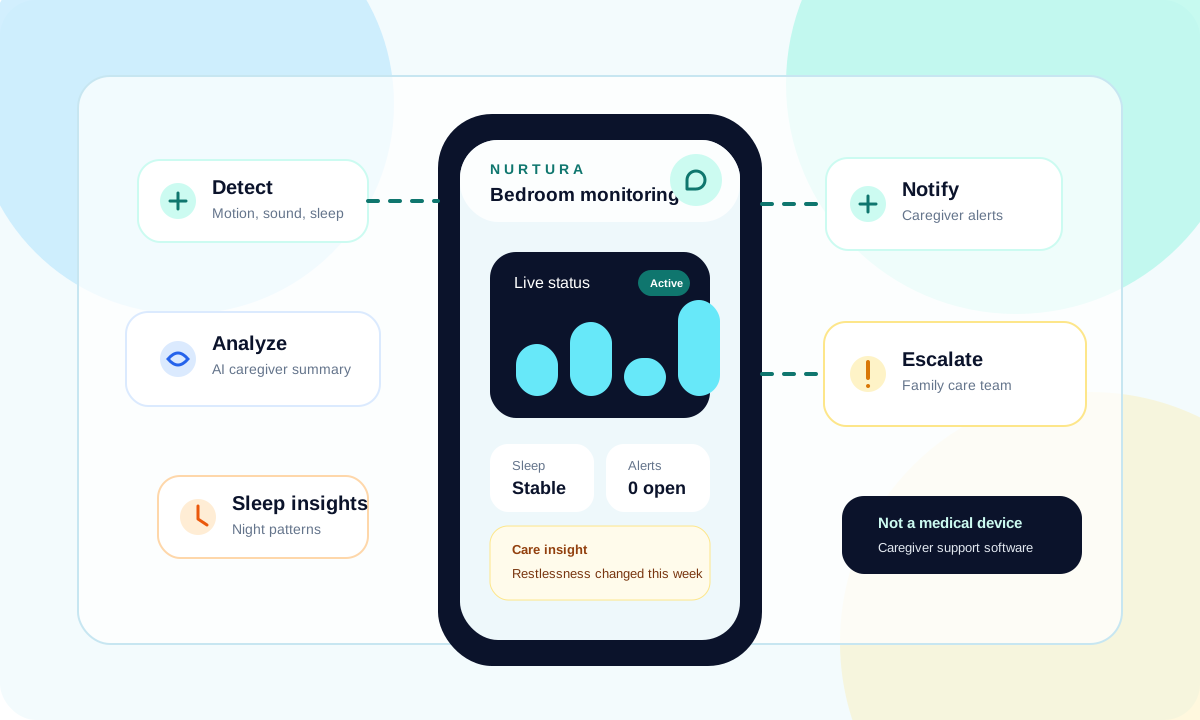
Custom BLE services with low-power firmware and a lightweight mobile companion app.
Problem: Reliability and delivery constraints around power optimization, streaming.
Approach: Defined activity capture goals and data transport requirements. Built custom BLE services and refined the power model.
Result: Extended battery life with optimized sleep and sampling profiles.
Evidence: [Metric] vs [Baseline] -> [Result]
Reliable multi-sensor data acquisition with resilient MQTT/HTTP reporting.
Problem: Reliability and delivery constraints around resilience, field diagnostics.
Approach: Identified data loss points and recovery gaps in the network stack. Implemented buffered queues with retry logic and diagnostics.
Result: Maintained data integrity across intermittent network conditions.
Evidence: [Metric] vs [Baseline] -> [Result]
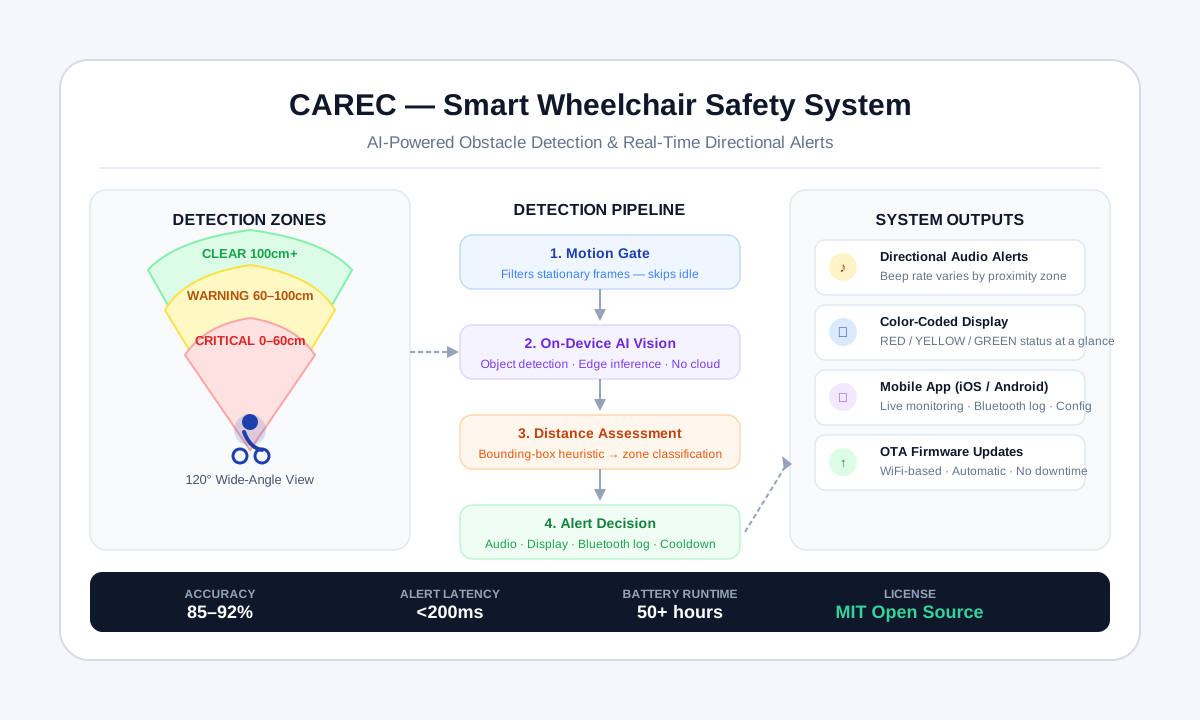
Firmware for connected HVAC nodes with predictive diagnostics and energy tuning.
Problem: Reliability and delivery constraints around diagnostics, low-power.
Approach: Reviewed telemetry and field failures with the service team. Added predictive diagnostic rules and tuned power profiles.
Result: Reduced field service calls through proactive alerts.
Evidence: [Metric] vs [Baseline] -> [Result]
Secure BLE streaming for vital signals with robust data buffering.
Problem: Reliability and delivery constraints around security, data integrity.
Approach: Mapped clinical data requirements and security constraints. Added encryption, buffering, and secure pairing workflows.
Result: Improved data integrity during intermittent connectivity.
Evidence: [Metric] vs [Baseline] -> [Result]
Edge firmware for vibration analysis with event-driven reporting.
Problem: Reliability and delivery constraints around signal processing, reliability.
Approach: Defined alert thresholds and edge processing constraints. Implemented FFT-based detection and event scoring.
Result: Enabled early fault detection and reduced downtime.
Evidence: [Metric] vs [Baseline] -> [Result]
NB-IoT and ZigBee lighting firmware with fleet management features.
Problem: Reliability and delivery constraints around fleet scale, connectivity.
Approach: Mapped connectivity issues across dense deployments. Added robust provisioning, telemetry, and fleet controls.
Result: Scaled deployment with simplified provisioning workflows.
Evidence: [Metric] vs [Baseline] -> [Result]
Secure data logging with encrypted storage and audit trails.
Problem: Reliability and delivery constraints around compliance, security.
Approach: Reviewed regulatory requirements and data retention needs. Built encrypted logging with tamper detection.
Result: Supported compliance and faster validation cycles.
Evidence: [Metric] vs [Baseline] -> [Result]
Battery-optimized sensor node with cellular backhaul and OTA updates.
Problem: Reliability and delivery constraints around battery life, remote updates.
Approach: Analyzed thermal and connectivity constraints in transit. Reduced power draw with adaptive sampling and sleep modes.
Result: Extended operational life while maintaining telemetry accuracy.
Evidence: [Metric] vs [Baseline] -> [Result]
Low-power metering firmware with anomaly detection and remote reporting.
Problem: Reliability and delivery constraints around low-power, anomaly detection.
Approach: Identified anomalous flow patterns and reporting needs. Implemented event-driven telemetry and leak detection.
Result: Improved leak detection and usage accuracy.
Evidence: [Metric] vs [Baseline] -> [Result]
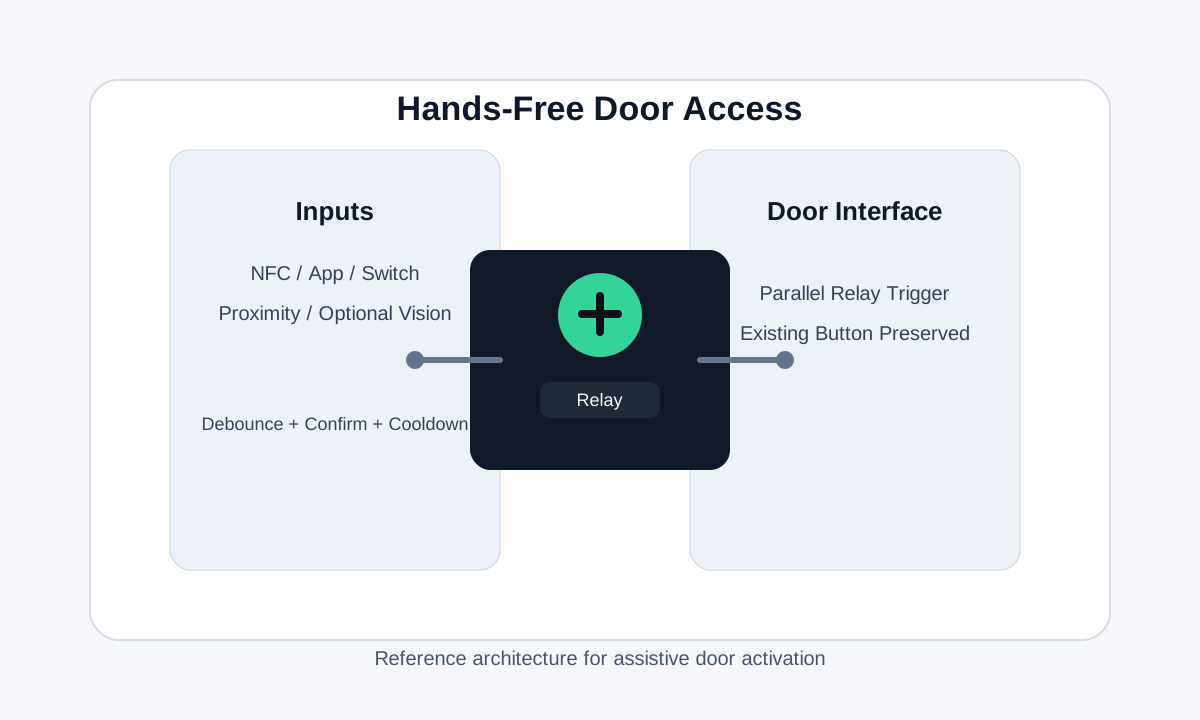
A safe, multi-modal door activation system for users who cannot press the accessible door button.
Problem: Reliability and delivery constraints around accessibility, safety logic, non-invasive door integration.
Approach: Defined accessibility-first requirements for multi-modal activation and safe relay control. Mapped debounce, confirmation window, and cooldown gating into a deterministic state machine.
Result: Designed to support hands-free activation with guarded trigger logic while preserving the existing button path.
Evidence: [Metric] vs [Baseline] -> [Result]
Problem: Validate update behavior when links are unstable and rollout risk is high.
Approach: Structured failure injection, staged rollout checks, and rollback verification.
Evidence: [Metric], [Baseline], [Result], [Dataset]
Problem: Balance energy profile with observability and remote diagnostics.
Approach: Profiling-driven sampling strategy plus telemetry checkpoints for anomaly visibility.
Evidence: [Metric], [Baseline], [Result], [Repo link]
Problem: Strong engineering findings often fail first-pass reviewer readability.
Approach: Structured manuscript framing, technical editing, and reviewer-response matrices.
Evidence: [Paper link], [Checklist], [Result]
Open to project consulting and research-aligned collaboration with a clear evaluation plan from day one.